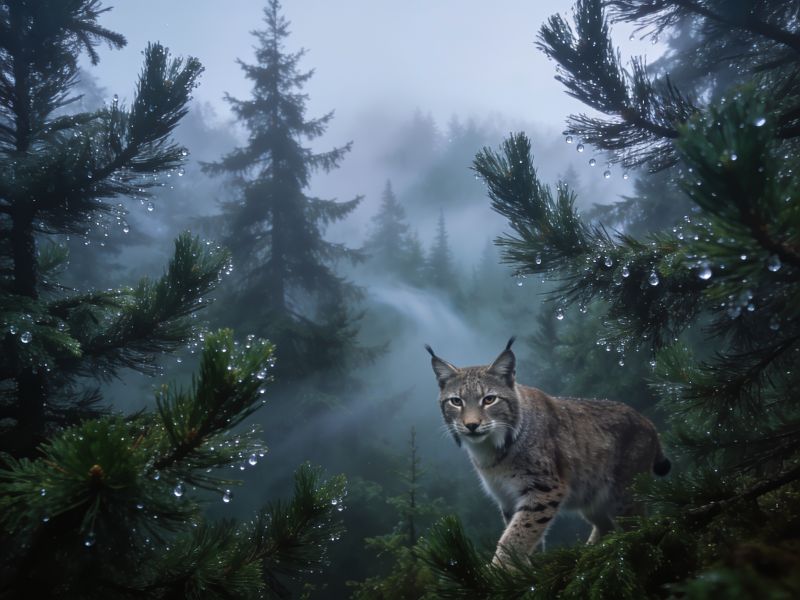
A European wildcat looks almost exactly like a large, muscular tabby — same striped coat, same white muzzle, same wary eyes — which is why for centuries people assumed it was simply a house cat that had gone feral. It is not. Wildcats are a genuinely separate species, Felis silvestris。and the differences hide in the details: a thicker, blunter tail banded with distinct black rings, a broader skull, a shorter gut built for nothing but meat. The tail is the giveaway for anyone who gets a clear look: a domestic tabby's tail tapers to a point, a wildcat's ends in a blunt, black-ringed club. I once compared a taxidermy mount of a Scottish wildcat with a domestic tabby in a museum in Inverness, and the wild animal's jaw looked like a small steel trap. That jaw is the whole story. Shoulder muscle, tooth size, digestive tract — everything about wildcats is engineered for killing rather than for dozing on a windowsill, and that engineering stays invisible until you put the two animals side by side.